The Game You Didn’t Realise You Were In
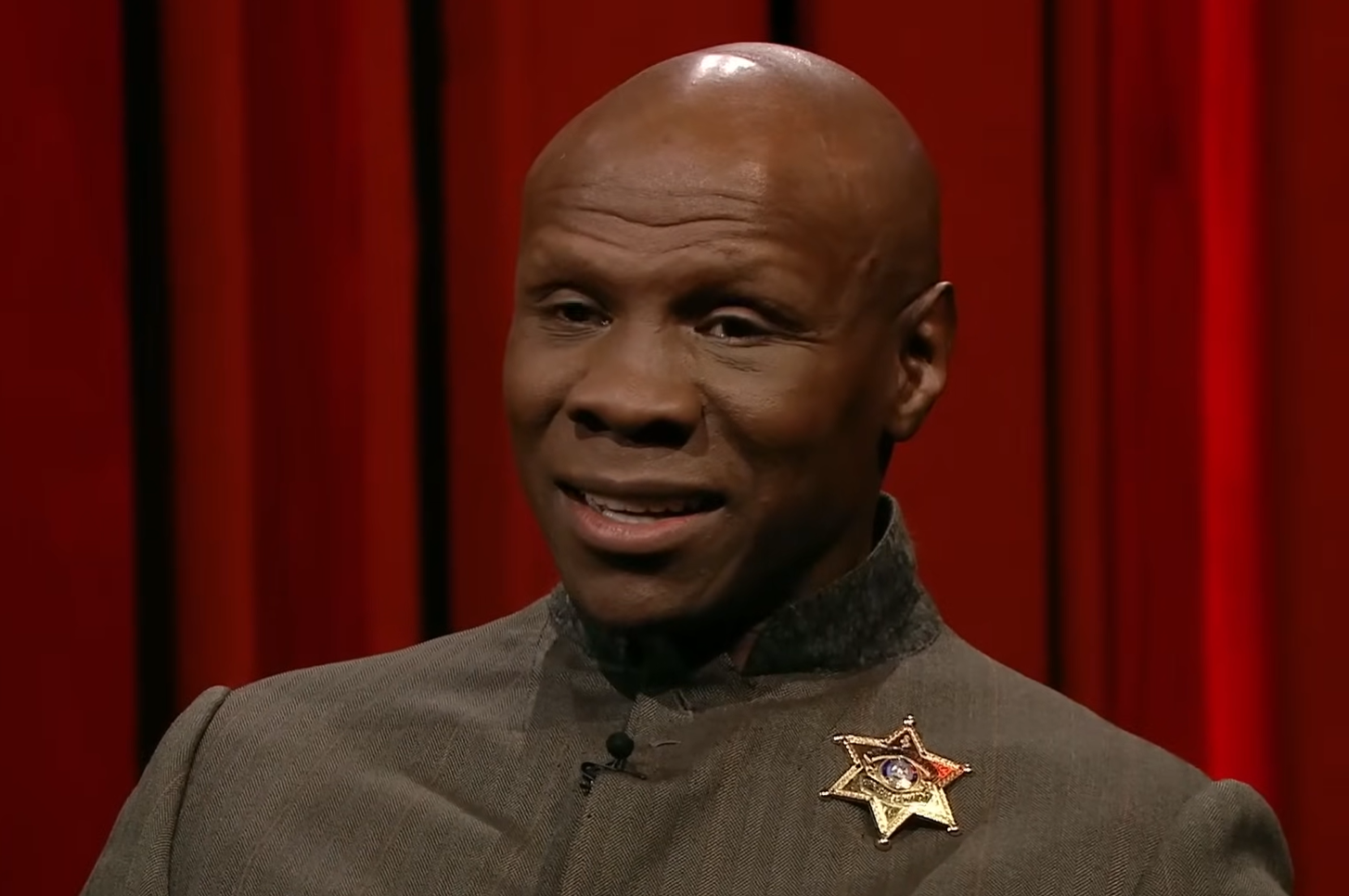
It was an interview with someone called Chris Eubank on a show where the host, Tommy Tiernan, does not know who the guest will be until they walk into the studio. The studio audience has no idea either.
That is the whole premise. No research notes. No carefully prepared opening question. No neat arc mapped out in advance. Just a person walking into the room and another
person trying to meet them in real time.
Which is a terrifying idea. It is also a brilliant one.
I did not know anything about Eubank. What I did discover through this conversation is that he is not exactly a low-voltage conversationalist. He speaks slowly and dramatically. He can be funny, philosophical, evasive, generous, combative and theatrical, often
within the same sentence.
In other words, there is what I call heat.
But what fascinated me was not just Eubank. It was the conversation itself. And not because it was polished. In some ways, that is what made it so good.
Tiernan is clearly working hard. Some of his questions are a bit
cumbersome. Some do not quite land. At times you can almost see him trying to make sense of Eubank while still keeping the conversation moving. There is a tension in it: how far does he push, how much does he let go, when does he follow the thread, and when does he gently bring things back?
There is no pretending Tiernan is three steps ahead. He is not performing expertise. He is listening, adjusting, recovering,
wondering, and occasionally stumbling his way into something better than a polished question might have produced.
And he has to keep doing something else as well. He has to keep finding his way towards Eubank.
I am not even sure the connection is properly established at the start. They are in the same room, but not necessarily in the same conversation
yet. Eubank arrives with his own rhythm, his own language, his own way of holding the room. The interviewer has to work with that in real time.
And he has to keep working with it.
A question does not quite land, so he adjusts. Eubank takes an unexpected turn, so he follows for a while. The conversation starts to wobble, so he steadies it without smothering it.
A moment of humour opens something up, so he stays with it. A strange answer hangs in the air, so he lets it hang a little longer than most interviewers would.
That is what makes it such good viewing. The connection is not built once and then safely stored away. It is being made, lost, repaired and remade throughout the conversation.
It is not
clean and controlled. It is alive.
And because of that, it starts to spark. Not in some dramatic, lightning-bolt kind of way. It is more like flint striking stone. A question lands awkwardly, a silence holds, a strange answer is allowed to sit in the air for a moment, and then something catches.
There is tension, but not hostility. There is playfulness, but
not avoidance. There are moments where things could tip into performance, defensiveness or awkwardness, but somehow they keep finding their way back to each other.
That is the part I keep thinking about. A good conversation is a bit like a fire.
Not a wildfire. Not something out of control. More like the kind of fire people gather around.
It needs enough heat to matter, enough material to keep going, and enough air to stay alive.
Take away the air, and even a promising conversation can suffocate. Add too much heat, and people start protecting themselves. Take away the heat altogether, and everyone stays comfortable, but nothing really catches.
Of course, not every conversation needs this.
Some conversations are meant to be simple. Practical. Almost aggressively mundane. How did you sleep? What would you like for dinner? Who’s turn is it to take out the rubbish? Has anyone seen my keys? How many poos did the baby do today? Did the dog do one on the walk?
These conversations
do not need to be dialled up to eleven. In fact, trying to make every conversation deep, alive and meaningful would be exhausting. It would also make you unbearable in the office kitchen and possibly in your own home.
But some conversations ask more of us.
The ones where something is unclear. The ones where there is tension in the room, but nobody is naming
it. The ones where people are being polite instead of honest. The ones where a decision matters, a relationship matters, or the same issue keeps coming back wearing a different hat.
That is where this matters.
Not because every conversation needs to become intense.
But because some
conversations are already carrying heat. The question is whether we know how to work with it.